The call came in around 5pm like a lot of trail calls. As an EMT I was used to the pager going off just before dinner time. I called it the danger hour. It’s when most adventurers have been out riding motor cross bikes all day long. They are tired. That is when accidents happen.
I worked in the remote area of the Pike National Forest as a 911 responder EMT-B. I have gone on hundreds of trail calls.
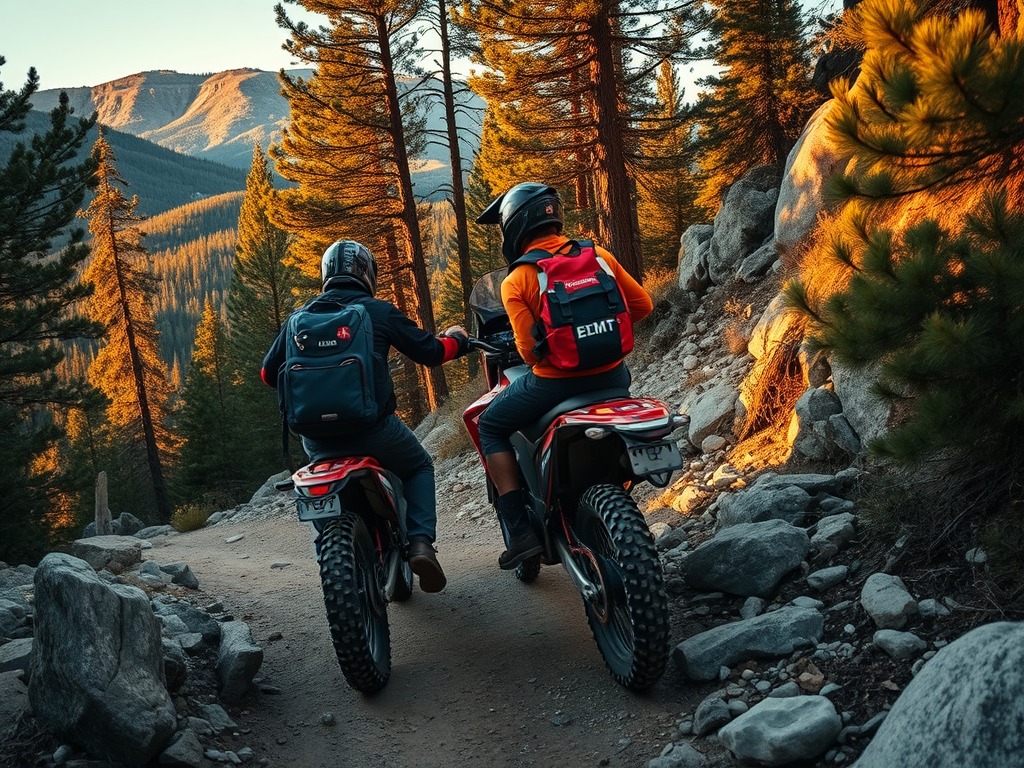
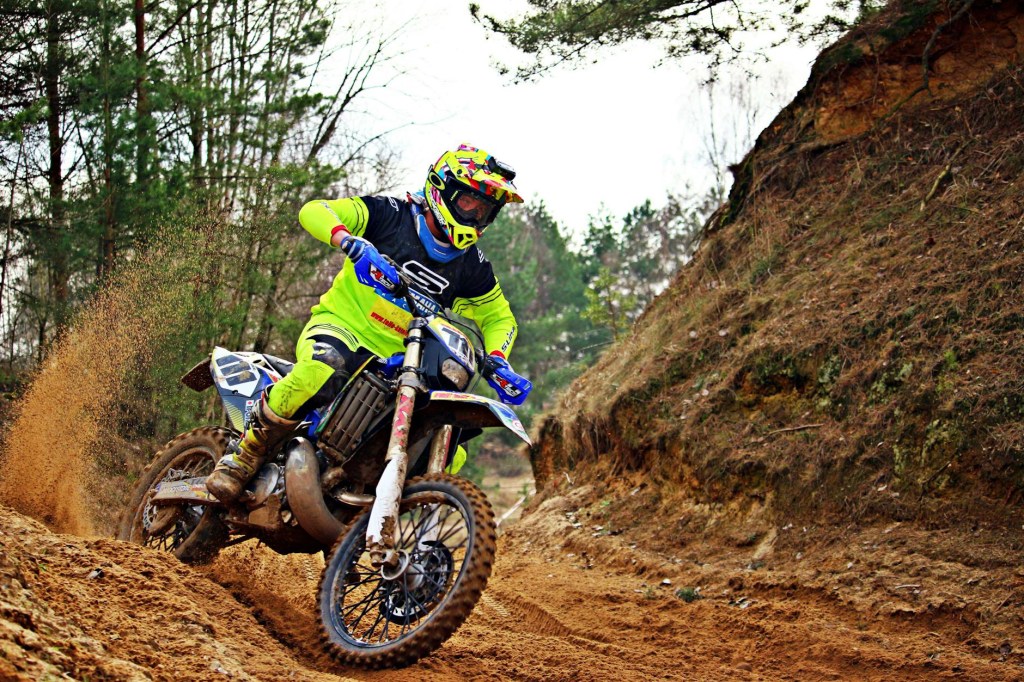
Usually it goes like this. Friends are out having a great day riding around the National Forest on their bikes. They have on all the gear, helmet, leathers, boots, gloves and eye protection. So they are well prepared for the ride.
There is over 115 miles of trails in the Rampart Range District for off-road riding. This is just one small section of trails in the Pike National forest of Colorado. It is a highly rocky mountainous area sitting around 7,000 to 9,000 feet in elevation.
The rider is usually not alone. Most of them are paired up with friends. It is safer that way. In case of an accident, one can go for help.
As an EMT-B, I’m trained for all kinds of terrain. The 911 dispatch reported a male rider down with suspected traumatic injuries after a crash on a steep, rocky trail. There was no access for traditional vehicles, and no suitable helicopter landing zone within range. The only way in? Ride in tandem on the back of the victim’s friend’s dirt bike.
We meet the friend and I tell him he is going to take me on his bike to his friend. I grab my emergency response pack. It is a backpack full of life saving gear, oxygen, and IV kit. It is a trauma rescue pack.
The look on this guys face is still with me all these years later. He is incredulous! He did not realize that we could find his friend only with his help. His assistance was crucial in all those miles of woods.
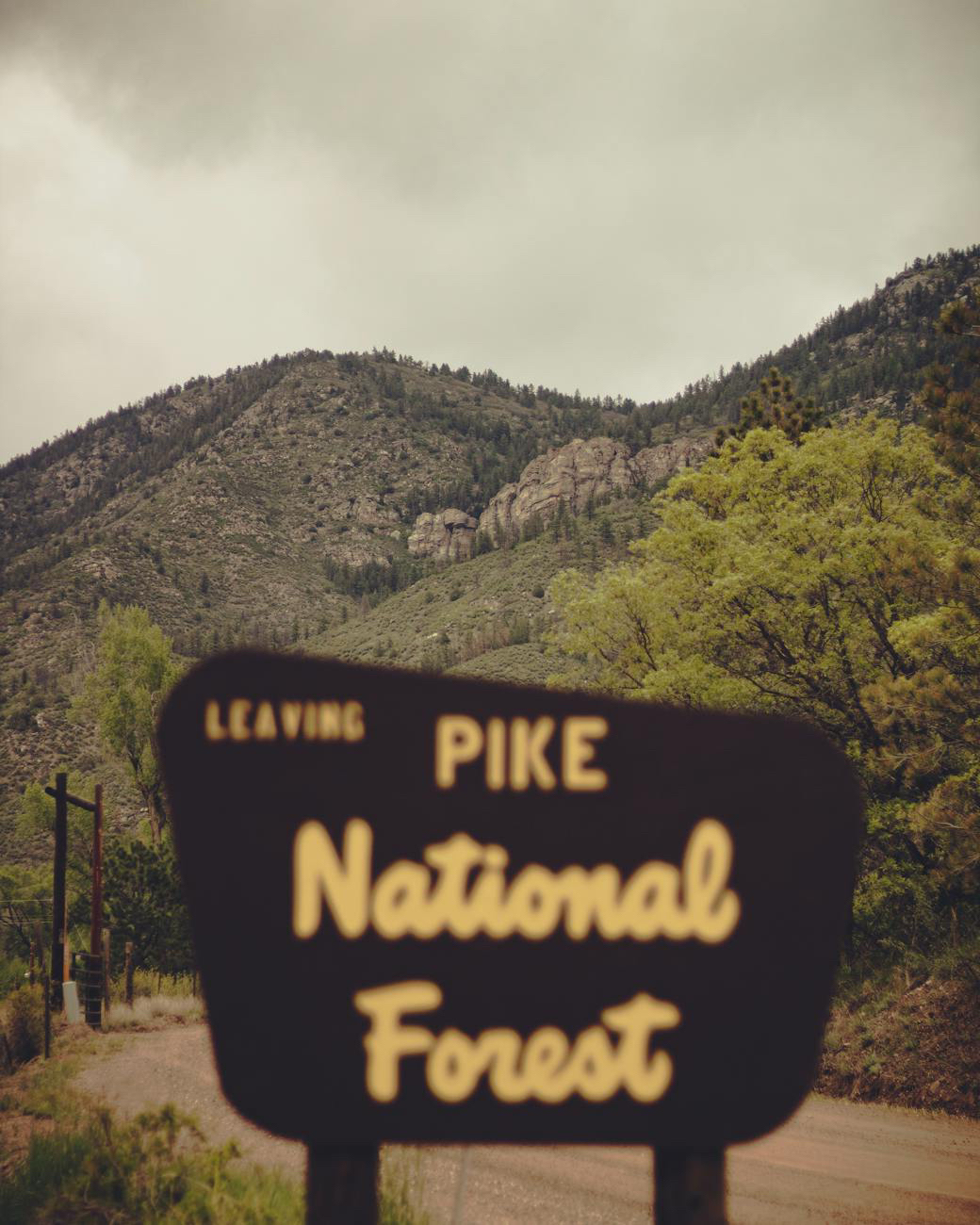
The Rocky Mountains have a way of humbling even the most seasoned outdoor enthusiasts. The Pike National Forest is nestled just west of Castle Rock, Colorado. This area is home to a maze of rugged National Forest Trails. These trails are popular with hikers, mountain bikers, and motor-cross riders. On this particular day, I was called to respond to a motor-cross accident. It occurred between the South Platte River and the Waterton Canyon. The terrain there is remote and technical. Access is a challenge, and the stakes are high.
With my trauma EMS backpack strapped on, I held tight as we sped through narrow, tree-lined paths and switchbacks, the sound of two-stroke engines echoing off the granite outcrops. The trail itself was unforgiving—roots, boulders, and steep inclines that would make even extraction by foot a daunting task.
We found the patient off to the side of the trail, conscious but in considerable pain. He’d been thrown from his bike. The jump went wrong, which resulted in a hard landing and a collision with a rock outcrop. Upon assessment, he had:
- A suspected fractured forearm (mid-shaft radius/ulna)
- A possible ankle dislocation
- Multiple abrasions and contusions
- Clear signs of pain on movement and instability in the affected limbs
My trauma backpack was loaded with critical tools for exactly this kind of wilderness scenario:
- SAM Splint – Lightweight, versatile, and moldable, perfect for stabilizing both his arm and ankle
- Trauma shears, gauze, and 4x4s – To clean and dress abrasions
- Elastic wraps and triangular bandages – To secure the splints
- Israeli bandage – Just in case hemorrhage control became necessary
- C-collar and space blanket – Spinal precaution wasn’t indicated in this case, but it’s always a consideration, especially with a high-speed ejection
I applied the SAM Splint to the arm and ankle, securing both with wraps and padding for stability and comfort. Pain management was limited—no narcotics in the pack as an EMT-B—but I reassured him and monitored vitals.
With no helicopter access, we had to initiate a ground extraction. When I first got on scene, my first thought was how we were going to get this guy to an ambulance.
This was not going to be an easy process. The decision was made to call the Douglas County Search and Rescue. They were contacted to obtain more personnel for help and their wheeled stokes basket. All people involved in this search and rescue are volunteers. They are paged out for the emergency and they go into action. It takes time for them to get to the emergency location. So we had to wait with the patient and try to keep him comfortable.
We quickly stabilized the situation using the tools in my trauma pack. This allowed us to prevent further injury during the transport phase. The patient was transferred to an ambulance. The medical team later confirmed a fractured arm and dislocated ankle. These are painful but survivable injuries, thanks to a fast and resourceful field response.
I am so grateful for the fellow volunteers. They all worked together as a team and helped our fellow human in need. It was a very rewarding time in my life!


 Momsthoughts
Leave a comment